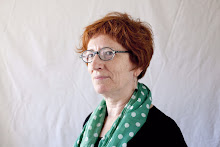
Yesterday I was reading an article about oxytocin – the “love hormone” or “cuddle hormone”. The piece mentioned that certain genetic variants of the oxytocin receptor gene, OXTR, are thought to be associated with a higher level of sociability, empathy towards others, etc., and so I decided to go and see which variant I had been dealt in the genetic lottery.
(click on the title to continue reading)
Well, apparently, I’m not that sociable, or trusting, or sensitive to other people’s emotions, because my genetic makeup at SNP rs53576 is “AG” – and that to be really good I would need to have a “GG” at that location. It’s true that I often find it hard to read other people’s emotions on their faces – but I don’t think I’m all that inconsiderate or introverted as they seem to say my variant should make me. I’m sure that, as happens with everyone of our human behaviors, there’s a genetic component in social attitudes, and a cultural and autobiographical component as well.
It seems that the A also makes people more (negatively) sensitive to stress. That, I must say, seems more familiar...
For the record, it was in 2009 that Sarina Rodrigues and colleagues at the University of California and Oregon Sate University announced in the journal Proceedings of the National Academy of Sciences that they had identified an “empathy gene”. The gene, OXTR, is the molecular receptor that allows for oxytocin’s various effects on human social behaviour. They observed that, at SNP rs53576, people could have an A or a G (two of the four DNA “letters”), and that those who had inherited a G from both their mother and father tended to be more pro-social.
Friday, March 16, 2012

Tuesday, February 7, 2012
Denisovan DNA is online
The genome of the third official (but extinct) species of modern humans has been published online in a public database and can be freely accessed by everyone at http://aws.amazon.com/datasets/2357. Now I’m sure I’ll be able to know whether some of my most remote ancestors also belonged to that species. When the results are in, I’ll let you know.
Thursday, December 15, 2011
The Neanderthal in me

I inherited 2.5% of my DNA from our ancient Neanderthal cousins. It’s an average value, I’m told in my results. Some people have more, others, have less Neanderthal in them. I also hope to know soon what percentage of my genome is Denisovan (the third species of modern humans, whose fossils were discovered in a cave in Siberia, and officially recognized a year ago). Like the Neanderthals, they’ve been extinct for some 30 thousand years, they coexisted with Homo sapiens (ourselves) and Neanderthals, and like the Neanderthals, they interbred with us.
Monday, May 16, 2011

Wednesday, May 11, 2011
My Asian ancestry is gone
 In one of my earliest posts, I mentioned 23andme’s Ancestry Painting, which allows us to see the origin of our chromosomes in terms of large geographical regions. At the time, I had some small fragments (less than 1 percent) of Asian origin. But recently 23andme announce it had made improvements to this functionality – and when I went there a few moments ago to see if anything had changed for me, I discovered that my Asian genes were no longer there...
Friday, May 6, 2011
On air: my genes and me on French radio

Listen to the podcast of the debate that took place today on France Culture's "Science Publique" program (in French).
Thursday, May 5, 2011
Me and my genes on French radio!
Tomorrow I'm participating in a debate, on the French radio station France Culture, on the topic “Do genetic tests predict our future?”. The program’s name is Science Publique and it starts at 2 p.m. (Paris local time).
Thursday, April 28, 2011
Tomorrow in Sciences et Avenir: my journey to my genes, revisited
My dear friend Dominique Leglu presents, in this video clip, the contents of the May issue of the magazine.
Friday, April 15, 2011
Luckily, I won't have to decide right away!

23andme anounced yesterday that is it now possible for their clients of European descent to know their Alzheimer's risk. This "diagnosis" includes the detection of a mutation, APOE ε4, known to substantially increase the risk of developping the disease.
Just as was the case with the hereditary breast cancer gene mutations when I received my first results, to see my results I would now have to click again on an opt-in button, signalling my informed consent.
I've long asked myself what I would do when the time came. Would I feel an irresistible urge to know? Being just a click away from the "truth" might turn out to be unbearable... And do I really want to know?
Now the time has come... but not exactly in my case, at least not immediately, because for that to happen I would have to get tested again, with a new kit. My current results are incomplete. I'm so relieved!
Monday, April 11, 2011
Cancer world

I learned today that my odds of having a squamous cell carcinoma - the second most common skin cancer, that usually develops on sun-exposed areas, namely on the face and hands - could be substantially higher than average. A study involving 537 persons afflicted by the disease and 1504 healthy controls, all of European descent, was published in Cancer Research , suggesting that a certain point mutation in a gene called IRF4 is associated with this cancer. And since I inherited the risky mutation from both my parents, my risk could be three times higher (2.89 to be exact). I know what I'm going to talk about with my dermatologist next time I see him.
Friday, April 1, 2011
Wednesday, March 30, 2011
Already 1,391
 According to Relative Finder (RF) I have today 1,391 "genetic cousins" (Ashkenazi Jews like me have record numbers of cousins, probably owing to their over-representation as 23andme clients; for other possible explanations, see this previous post.)
I'm currently sharing my genetic information with 336 "cousins" and I've had 30 contact requests turned down (it happens). Also according to RF, I have a few dozen third cousins, a few fourth and fifth cousins, but the vast majority are so-called distant cousins - that is, people with whom I might share an ancestor from several centuries ago. Up to now, I haven't been able to confirm any of the estimated closest relationships, something I would have to do using the scarce information I have on my grand-parents, great-grandparents and so forth.
Monday, November 15, 2010
Oh cousin, who art thou?
23andme has a thing called Relative Finder which allows us to discover, among all the people who had their DNA analyzed by them, which are our "genetic cousins" - and also gives us the estimated proximity of that family relationship. But, for obvious privacy reasons, they don't reveal those persons' identities, and we are required to send them an invitation if we wish to contact them. Once we know who they are, we can proceed to try and compare paper trails and see if we have any known ancestors in common.
That's what I did with the one person estimated by RF to be my second cousin
(which would mean we have a set of great-grandparents in common): I sent her an invitation to contact me. She replied saying she accepted contact, but still didn't tell me who she was (did she forget to do it, did she not know how to do it, did she not wish to do it? I really don't know). But I still only know about her that she is a female and that her maternal haplogroup is N1b2. And I have no way to do anything else. I wrote her back several other messages, the last one on November 8, but still no answer. It's frustrating.
That's what I did with the one person estimated by RF to be my second cousin
(which would mean we have a set of great-grandparents in common): I sent her an invitation to contact me. She replied saying she accepted contact, but still didn't tell me who she was (did she forget to do it, did she not know how to do it, did she not wish to do it? I really don't know). But I still only know about her that she is a female and that her maternal haplogroup is N1b2. And I have no way to do anything else. I wrote her back several other messages, the last one on November 8, but still no answer. It's frustrating.
Wednesday, June 30, 2010
Friday, June 25, 2010
I earned a badge

This morning, when I logged into my 23andme account, I found out that I had earned myself a Research Pioneer Badge for my contribution “to the first 23andWe research discoveries” published yesterday in PLoS Genetics, and derived from the DNA testing of thousands of people from the public at large. Namely, from the company’s clients who, like me, consented to the use for research purposes of their personal genetic data and of their answers to one or more surveys.
This is the first time, says an editorial in that same publication, that a human genome-wide association study, or GWAS, is performed based on information gathered through the Internet and stemming from such a population. The study shows, according to its authors, that this approach is not only reliable, but that it also allows the discovery of novel genetic associations.
Tuesday, June 8, 2010
DNA swapping at 23andme
A few days ago, 23andme sent emails to 96 potentially affected clients warning them that the lab who reads the DNA for the company had mixed-up their genetic identities and sent them some other persons’ results.
The first sign that there was something wrong was a post, published on June 2nd, in the 23andme community section, by a mother who panicked when she accessed her family’s results online: “He was not a match for any of us. I checked his haplogroups and they were different from ours. I started screaming. A month before my son was born two local hospitals had baby switches”, she wrote. 23andme responded two days later telling her they were analyzing what might have happened.
Mistakes happen. What I don’t understand is that non-affected clients like myself only today learned about this through various blogs, and not directly from 23andme. The company’s response has been overly discrete, and to date, there has been no public announcement from them. It would really help if they were more transparent!
The first sign that there was something wrong was a post, published on June 2nd, in the 23andme community section, by a mother who panicked when she accessed her family’s results online: “He was not a match for any of us. I checked his haplogroups and they were different from ours. I started screaming. A month before my son was born two local hospitals had baby switches”, she wrote. 23andme responded two days later telling her they were analyzing what might have happened.
Mistakes happen. What I don’t understand is that non-affected clients like myself only today learned about this through various blogs, and not directly from 23andme. The company’s response has been overly discrete, and to date, there has been no public announcement from them. It would really help if they were more transparent!
Wednesday, March 24, 2010
Spit again, please!
Two days ago I received my Family Tree DNA kit (by their kind courtesy). This means I’ll have to spit again into a little tube, this time to have my mitochondrial DNA fully sequenced, and not just a few SNPs, or point variations, as I’ve already done.
This is the ultimate test you can take to learn about your origins along your direct maternal line. Not only will it pinpoint ethnic and geographical origins with unprecedented precision, but it will also allow me to see if anybody else’s mtDNA in their database (which is currently the largest one there is, according to them) matches mine.
Still according to their site , this would mean that person and I share a common “grand-mother” in the not too distant past. And if so, we will have the opportunity to get in touch with each other.
I haven’t drooled into the tube yet, but when I do and the results come in, I’ll come back to this in due detail.
This is the ultimate test you can take to learn about your origins along your direct maternal line. Not only will it pinpoint ethnic and geographical origins with unprecedented precision, but it will also allow me to see if anybody else’s mtDNA in their database (which is currently the largest one there is, according to them) matches mine.
Still according to their site , this would mean that person and I share a common “grand-mother” in the not too distant past. And if so, we will have the opportunity to get in touch with each other.
I haven’t drooled into the tube yet, but when I do and the results come in, I’ll come back to this in due detail.
Thursday, February 11, 2010
Inuk and me
 In The Spittoon, 23andme’s blog, we are given the opportunity to compare some of our SNPs with those of Inuk, the man from 4000 years ago in Greenland who today officially became the first ancient human to have his genome almost completely sequenced (you can read here the article I published today in my newspaper, PÚBLICO - and if you don't read Portuguese you can read the Spittoon's post). I went and compared. Cool!
Image: Inuk by Nuka Godfredsen/Nature
Monday, February 1, 2010
Cancer risks revisited
 The Spitton, 23andme’s blog, mentions a paper in Nature Genetics by Gloria Petersen from Mayo Clinic and colleagues which pinpoints several locations in the genome which may me associated with higher risks of developing pancreatic cancer – maybe the most lethal of all cancers.
 Randy Pausch (photo), the computer scientist at Carnegie-Mellon U., died of it a year and a half ago. (Remember his famous and moving “Last Lecture”?)
I went and tried to evaluate my own risk by following the instructions in that post, which consist in looking at my raw genetic data from 23andme at the following SNPs (or point mutations): rs9543325 (on chromosome 13), rs3790844 (on chromosome 1) and rs401681 (on chromosome 5).
The results are not clear-cut.
At rs9543325, my genetic make-up (CT) corresponds, according to the study in Nature Genetics, to 1.23 times higher odds to get one day this type of cancer than if it were the most common one (TT).
At rs3790844, I’m AG e that lower my odss (it multiplies the typical odds by 0.75);
And at rs401681, I’m CC, which means typical odds – lower in particular, than those of ao people who are CT ou TT at this location, and who might also have higher odds, according to previous studies, of contracting melanoma and colorectal cancer.
But even this last SNP, in spite of my genetic configuration apparently being the best possible one, is a two-sided coin, since having one or two C’s in this position has been associated, also in previous studies, to higher odds of getting other types of cancer: basal cell carcinoma (a type of "benign" skin cancer, I had one removed last year, thank you very much), as well as lung, bladder, prostate (which doesn’t concern me), cervical and endometrial (lining of the uterus) cancer.
Enough!
(Image: all rights reserved)
Wednesday, January 6, 2010
Genealogical stalker
Genealogical stalkers are people who find our name in the publicly available records accessed by the search engine of an online genealogical database, become convinced that they are distantly or closely related to us and absolutely want to know who we are and to get to know us better.
One of the participants in a mailing list I subscribe to has actually experienced the phenomenon personally. The other day, she wrote to the list that a genealogical stalker had found her name on a well-known genealogy website and had then gone to the extent of phoning her mother (looking for her phone number, I suppose). The mother's number, by the way, is unlisted, which only highlights the level of obsession involved in the stranger's act.
Creepy but predictable, don't you think?
One of the participants in a mailing list I subscribe to has actually experienced the phenomenon personally. The other day, she wrote to the list that a genealogical stalker had found her name on a well-known genealogy website and had then gone to the extent of phoning her mother (looking for her phone number, I suppose). The mother's number, by the way, is unlisted, which only highlights the level of obsession involved in the stranger's act.
Creepy but predictable, don't you think?
Subscribe to:
Posts (Atom)

 Posts
Posts